







Lead follow-up: the full guide
What an owner should know before buying it or hiring someone to run it. Reviewed November 2026.
How many times should you follow up with a lead?
More than once, and over a longer stretch than feels natural. A lead who doesn't book on the first call hasn't necessarily said no. They might be comparing quotes, waiting on a spouse, waiting on a paycheck, or just busy. Follow-up keeps you in the running while they sort that out, without you having to remember who's who.
Where we'd start: a few touches in the first days, while the need is fresh, then a slower pace for the weeks after. Mix the channels. A text, an email with a useful answer, a call task for your team, another short text. Each touch should give the lead a reason to reply, not just remind them you exist.
The length depends on what you sell. A one-time clean can be decided in a day. A new HVAC system or a roof replacement can sit for a season while the customer saves up or waits for the weather. We match the sequence to how your customers buy, then let your own replies and bookings show us where to trim.
Keep reading the guide5 more sections
What's the best follow-up text for a new lead?
Write it the way you'd text a customer from your own phone. Short. Their name, your name, the job they asked about, and one easy question. 'Hi Tom, it's Jess at Brightside. Still need the move-out clean on the 30th? Want me to send over a couple of times?' gets read. A template that opens with 'Dear valued customer' gets deleted.
Later messages have to earn their place. Answer a worry that stops people booking: what's included, whether they need to be home, how pricing works, what happens if it rains. Share a short before-and-after from a similar job. Ask whether the timing changed. An email can carry the longer answer, with a short text pointing to it.
Avoid anything that pretends to be urgent when it isn't, and anything a person on your team wouldn't say out loud. And the minute a lead replies, the automation should step aside. A real question deserves a real person, with the whole conversation in front of them.
When to stop following up with a lead
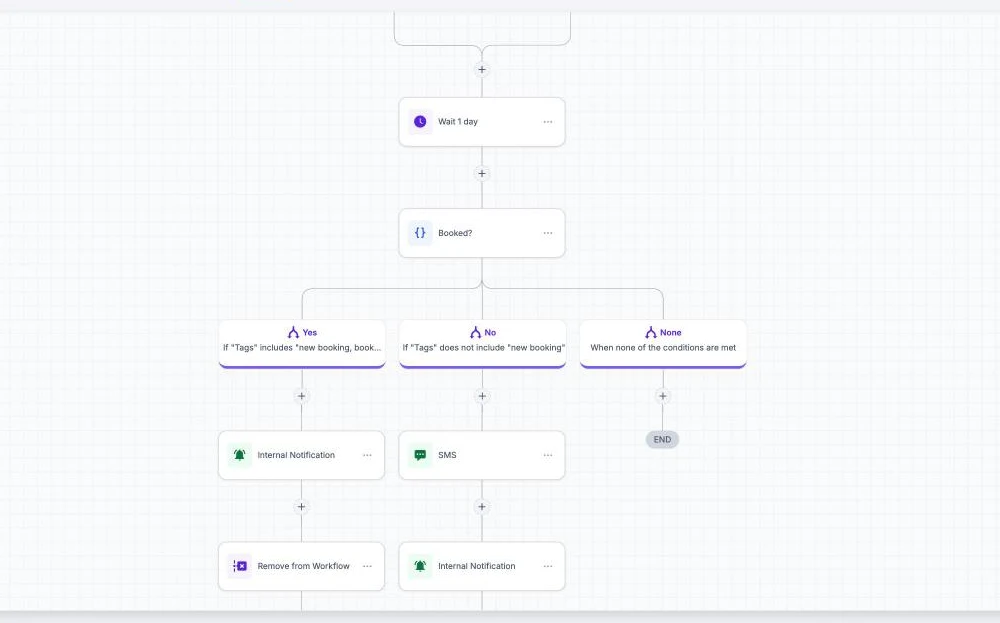
Stop the moment the lead books, replies, or opts out. Those three stop rules matter more than any single message in the sequence. A lead who replies 'can you come Tuesday?' and then gets 'still interested?' the next morning has just learned that nobody is reading their texts.
In LeadLite, a booking or a reply ends the sequence, and a STOP reply sets do-not-disturb on the contact, so texts already queued fail instead of sending. Only the contact texting START again removes it. Run one follow-up engine per conversation: if the AI assistant is already following up on a chat, the workflow shouldn't be texting the same person too.
If a lead stays quiet all the way through, end with a clear last message ('I'll close this out for now. Text me anytime if you still need it.') and move them to a long-term list. Quiet now doesn't mean never. Those contacts belong in your seasonal and reactivation campaigns, not in the trash.
Is it okay to text leads who didn't reply?
Start with consent. Business texting runs on consent: carriers and the industry expect a business to have a person's permission before sending marketing texts, with a clear way to opt out. Carriers look for an opt-in checkbox on your form that's unchecked by default, with plain wording about what texts they'll get, how often, and how to stop. That checkbox is also the cleanest record you can have if a customer ever asks when they signed up. In LeadLite, consent is recorded on the contact record.
Opt-outs have to be honored. A reply of STOP ends texts to that contact, the standard is to honor any opt-out within ten business days, and a plain-words request like 'please stop texting me' can count too. Your business number also needs carrier registration before it texts at all, and some states add their own rules on texting hours and frequency.
We set up the registration, the opt-in wording and the opt-out handling as part of the build, and we set send windows on every campaign. What we can't do is tell you your texting is legal. Confirm the rules for your state with your own attorney.
How to follow up with old leads
Old inquiries sitting in your phone, inbox or a spreadsheet are leads you already paid for. Before anyone gets a text, the list gets cleaned: duplicates merged, bad numbers removed, and anyone without permission to text set aside for an email or a call from your team instead.
Then they get their own sequence, written for someone who asked a while ago. Don't pretend the inquiry was yesterday. 'You asked about gutter cleaning last fall. We're booking spring visits now if it's still on your list.' is honest and easy to answer. Send it in batches over several days rather than all at once, so replies come in at a pace your team can handle and your number's sending record stays healthy.
Whatever comes back is useful. A booking is a booking. A 'not anymore' tells you something about why leads were lost. An opt-out cleans your list. The only result that teaches you nothing is the one you get from leaving the list alone.
Email follow-up has rules too
Email carries the longer answers: what's included, how pricing works, what to expect on the day. It also has its own standards. Every marketing email should have an honest subject line and sender details, a valid postal address, a clear way to opt out, and opt-outs honored promptly. Inbox providers look for the same basics. LeadLite adds a one-click unsubscribe to campaign emails, and we add your postal address and a visible unsubscribe link to the footer.
Deliverability is the other half. Gmail and Yahoo check that bulk mail comes from an authenticated sending domain before they trust it, so we set up a dedicated sending domain for your business and add its records at your domain host. A new sending domain needs a warm-up period, which is one more reason to build follow-up before you need it.
And keep speed to lead in the picture. The first reply to a new inquiry is a separate job from the follow-up after it. A fast first reply catches the person ready to book now. Steady follow-up stays in touch with everyone else.
What a good lead follow-up setup includes
- Every lead source starts the same follow-up
- An opt-in checkbox on every form, unchecked by default
- Send windows set on every campaign
- Bookings, replies and STOP texts end the sequence
- One follow-up engine per conversation, never two
- Call tasks for leads worth a human touch
- Old leads cleaned before anyone gets a text
- Campaign emails carry your address and an unsubscribe link